



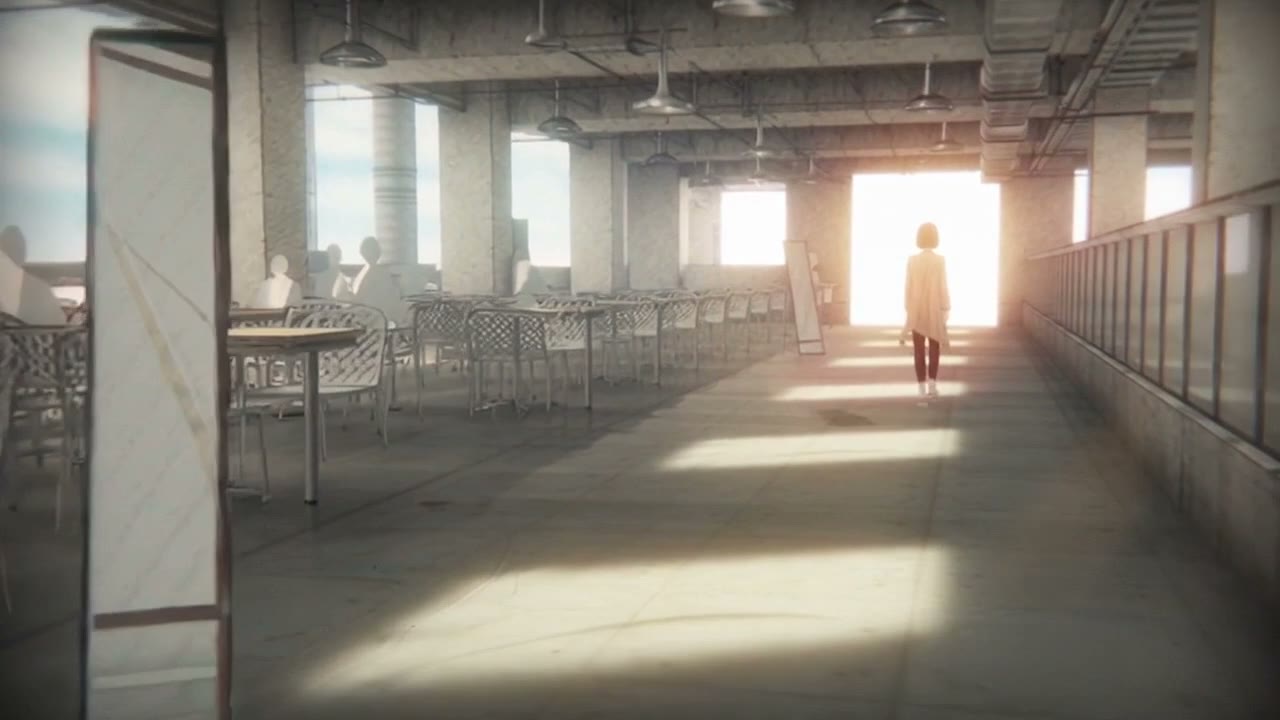


Body → cognition → realm → body
Every tick, the body's signal becomes evidence; the cognitive stack revises its beliefs and reports its surprise; a scheduler decides whether the budget can afford a controlled decoherence event; the realm warps; the player re-stabilises. Recovery is what gets credited — not avoidance.
The interior is treated as private not because it is sacred, but because no one has built a way in. ODYSSEY is that way in.
Innocence · Experience · Los · Abyss
The world does not move along a plot. It settles toward — and is pulled between — four symbolic attractors borrowed from Blake's cosmology. Where the realm sits, and how far it is allowed to drift, is set by the body and the budget, not by a script.
Every session is evidence
ODYSSEY is built to be tested, not just felt. Each session writes in-session indices computed live from the loop stream — arousal variance, recovery half-life after decoherence events, attentional stability, cognitive flexibility, an interoceptive-accuracy proxy, uncertainty trajectory, conflict rate, integration ratio — alongside pre/post deltas so a session can be benchmarked against itself and against matched controls.
Engine-side traces — free-energy trajectories, oscillator coherence, semantic coherence, concept entropy, precision swings — are logged so external analysis can distinguish looks calm from actually integrated.
The claim ODYSSEY lets you test: closed-loop, body-driven imagination training under controlled decoherence improves arousal regulation and integrative cognition versus matched controls — visible both in pre/post scores and in mid-session recovery trajectories.